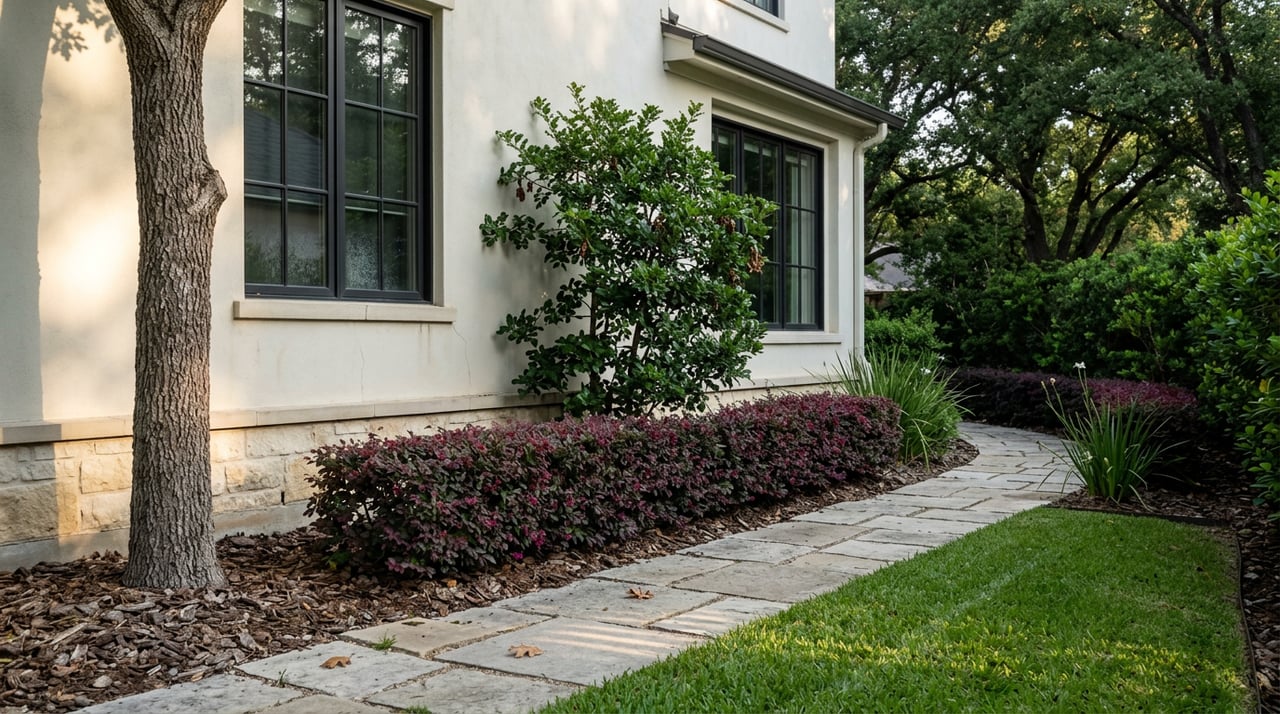
Terrell Hills Has No Town Square. This Year, Broadway Might Become One
Drive through Terrell Hills looking for its center and you will not find one. No corner coffee shop anchoring a commercial block, no cluster of storefronts where neighbors bump into each other on a Saturday morning. The city is 1.6 square miles of houses, curving streets, and mature oak canopy, incorporated in 1939 and proud enough of staying that way that it fought off a San Antonio annexation attempt in 1945. It runs its own police and fire departments. It has almost no retail of its own. For a city with just over 5,000 residents, that is an unusual amount of restraint.
So where does a place like this actually gather? The answer says more about Terrell Hills than any list of amenities could, and it explains why a $2.4 million streetscape project on Broadway is a bigger deal to residents than its price tag suggests.
Most small cities eventually grow a commercial spine, even a modest one: a diner, a hardware store, a strip of parking out front where people linger. Terrell Hills never did. Residents run daily errands over the border in Alamo Heights or along Austin Highway, and the handful of businesses inside city limits are outnumbered by houses on every block. The tradeoff is a quieter, more private street, but it also means the city has no natural place for people to just show up.
Terrell Hills solved that problem the way a lot of small residential cities do: by borrowing space that was built for something else and turning it into a gathering spot a few days a year.
The clearest example is the Terrell Hills Police Department itself. On April 18, 2026, the department turned its own lot at 5100 N. New Braunfels Ave. into the site of a Bike and E-Bike Safety Event, complete with a safety class from a Bike Patrol Officer, a bicycle rodeo for younger kids, free helmets while supplies lasted, and hot dogs for anyone who showed up. It is not a park. It is a police department parking lot repurposed for one Saturday morning, because the city does not have a dedicated space built for that kind of event.
The same logic shows up every summer at Geneseo Esplanade, a residential median that becomes the staging ground for the Annual 4th of July Parade & Block Party. The lineup forms down Ivy Lane, and the city closes sections of Eldon and Geneseo for the morning so the parade can run before the block party takes over. It works because a grass esplanade between two streets is the closest thing Terrell Hills has to a public square, and residents have simply decided that is enough.
Later in the year, the police department hosts again, this time for National Night Out at the Park, a community and first-responder event built around food trucks, live entertainment, and information booths, with families encouraged to bring their own lawn chairs. Three different events, three different months, and all three happen because the city keeps finding new uses for the small number of shared spaces it actually has.
Taken together, the city's annual rhythm looks something like this:
Even the garden tour fits the pattern. Once a year, seven homeowners open their private gardens to the public, and for a single afternoon, Terrell Hills gets something close to a cultural venue, funded not by a city budget line but by the residents who volunteer their own backyards.
If Terrell Hills has an informal town center, it is a single restaurant. A family-owned Mexican restaurant on Broadway, open since 1979, with a colorful, easygoing patio, has functioned for nearly five decades as the closest thing to a neighborhood gathering spot that exists inside city limits without a city calendar attached to it. It did not become that by design. It became that by default, because there was so little competing for the role.
The same holds for how people move through the neighborhood day to day. Streets like Eldon and Morningside see a steady stream of evening walkers, not because they lead anywhere in particular, but because the tree canopy and the curving, low-traffic layout make walking pleasant enough that it has become its own kind of informal social hour. In a city with no plaza, the sidewalk does some of that work instead.
That backdrop is what makes the city's newly approved Broadway investment worth paying attention to. The Terrell Hills City Council has unanimously approved a $2.4 million beautification project along Broadway Street, funding wider pedestrian walkways, new heritage oak trees, and custom lighting. It is worth being precise about what that is and is not. This is not a new retail district. No storefronts are being added, and the project does not change zoning or bring in new businesses. It is landscaping, lighting, and sidewalk work on a street the city already had.
But for a city that has spent decades staging its social life in borrowed spaces, that distinction matters less than it sounds. Wider walkways and better lighting mean the walk down to that one Broadway restaurant, or an evening loop that extends a block or two further than usual, becomes a more comfortable daily habit rather than something reserved for a parade day or a garden tour. The city's own notices page has also flagged a proposed Geneseo Esplanade Project alongside the Broadway plans, suggesting this attention to shared outdoor space is not limited to a single street.
None of this turns Terrell Hills into a downtown. It was never trying to be one, and the same instinct that blocked annexation in 1945 still shapes how residents talk about the place: small, quiet, and deliberately short on commercial density. What the Broadway project actually does is take the informal, occasional way the city has always gathered and make the everyday version of it a little easier. The parade, the bike rodeo, and the garden tour still happen a few days a year. The oak-lined sidewalk you walk every evening is what changes in between.
That is a small shift, but it is not a cosmetic one. A city that has spent its whole history choosing not to build a commercial center has just spent real money making its residential edges more walkable instead. For the people who already call Terrell Hills home, that is the kind of change worth noticing.
If you have questions about how Terrell Hills fits into the broader San Antonio market, or you're weighing a move within the neighborhoods that surround it, Leslie Reyes Idais knows this pocket of the city well. Let's Connect.
Your goals are the priority. Whether you're searching for your first home, upgrading, downsizing, or selling, Leslie Reyes Idais offers personalized guidance tailored to your unique needs. Every step of the process is handled with care, professionalism, and attention to detail to ensure a smooth and rewarding experience.
LESLIE REYES IDAIS
6606 N New Braunfels Ave San Antonio, TX 78209